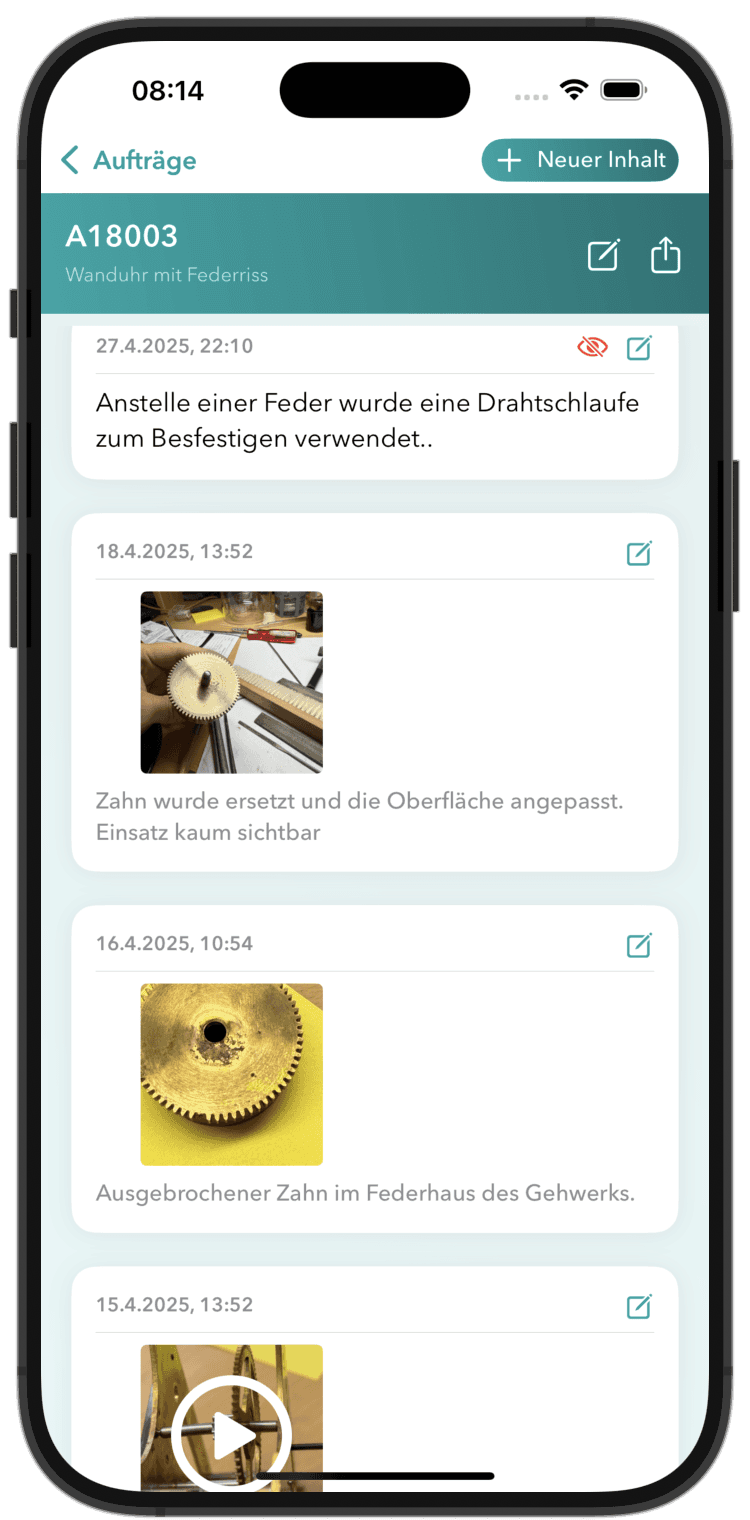
With the introduction of digital repair documentation, the skilled trades are undergoing a fundamental transformation: work processes can be documented and made transparent and traceable—from the initial damage assessment to the finished result.
Transparency in repair operations for higher quality and optimized customer communication
Digital repair documentation in skilled trades – why it is unstoppable
In a workshop, the air smells of oil and metal, tools gleam, machines hum – but amid all of this, something invisible is growing: digitalization. In particular, digital repair documentation has long been more than just a trend – it has become a necessity. Why? Because it takes efficiency, transparency, and competitiveness in the skilled trades to a new level. And those who do not document digitally today risk falling behind tomorrow.
From notebook to click – a paradigm shift in skilled trades
In the past, the process was clear: record the defect, hand sketch, handwritten repair report, stacks of paper in the office. Today? A mobile device replaces entire folders. This not only saves time – it also reduces sources of error and ensures legal protection.
What exactly does digital repair documentation mean? Digital repair documentation describes the systematic, electronic recording of all steps related to maintenance, servicing, and repair – including photos, timestamps, and signatures.
Typical contents:
Error description
Working time and materials used
Before-and-after photos
Customer approval via digital signature
Linking with ERP systems or order management systems
7 unbeatable advantages of digital repair documentation
1. Outstanding time savings
Decipher handwritten notes? Scan documents? No more! With digital solutions, documentation is done directly on site – in real time. This speeds up billing, and follow-up questions are eliminated.
2. Error reduction and greater accuracy
Automated input forms and mandatory fields prevent gaps or misunderstandings. Every step is traceable – even months later.
3. Legal protection
In the event of complaints or disputes, seamless digital documentation helps you prove your work with crystal clarity – with photos, data, time, and customer signature.
4. Customer communication at a new level
If desired, customers automatically receive PDFs, service reports, or real-time updates. This builds trust – and creates a professional impression.
5. Integration into existing systems
Modern tools can be seamlessly connected to your accounting, time tracking, or inventory management. This creates a holistic digital workflow.
6. Less paper, more sustainability
Those who document digitally not only save archive space, but also reduce paper consumption. This is efficient – and environmentally sound.
7. Securing competitiveness
Generation Z expects modern processes. Those who document with tablets and communicate professionally stand out from the competition – and score points equally with both skilled workers and customers.
Which industries benefit the most?
Digital repair documentation is not only relevant for traditional technical industries, but also offers major advantages in the arts and crafts sector. The following trades benefit in particular:
Artisans
Upholsterers
Jewelers
Goldsmiths
Watchmakers
Restorers
Wherever high-quality one-off pieces, unique items, or valuable objects are regularly repaired, restored, or maintained, digital documentation ensures greater transparency, traceability, and efficiency. It enables seamless recording of all work steps, facilitates communication with customers, and serves as reliable proof of the measures carried out and the condition of the object before and after repair.
Especially in these arts-and-crafts industries, where individual solutions and precise craftsmanship are required, digital documentation is a real added value – both for internal processes and for customer retention.
What is needed for this?
The basic setup:
A tablet or smartphone per technician
A suitable software solution (e.g., ToolTime, openHandwerk, Craftnote, or similar)
Optional: cloud storage or an interface to the existing system
Tip:
Many software providers offer free trial periods – an ideal way to gradually familiarize teams with digitalization.
Bring employees along – this is how the change succeeds
The best tools are of little use if the team does not come along. Training, clear processes, and an open error culture help reduce reservations.
Recommendation:
Rely on digital mentors within the team
Introduce clear standards
Communicate the added value for everyone
Common concerns – and how to address them
"Our people aren’t that tech-savvy."
Answer: Most apps are intuitive. Good training and patience are often enough to successfully master the transition.
"This is all far too expensive."
Answer: The savings from time gains, faster invoicing, and fewer follow-up questions pay off quickly. Many tools pay for themselves after just a few months.
"What happens if the system fails?"
Answer: Most solutions are cloud-based with automatic data backup. Offline functions also allow work without a network.
The future is now – trends and outlook
Digital documentation is evolving continuously:
Speech recognition: Capture repair reports via dictation
Artificial intelligence: Error detection based on images
Augmented reality: Instructions and live support directly on site
What seems innovative today is standard tomorrow. Those who invest early secure a clear advantage.
Documenting digitally will give you a competitive advantage
Digital repair documentation is not just a practical tool – it is a key building block for a future-proof skilled-trades business. Whether you want to grow, ease the workload of your employees, or delight your customers – soon, it will no longer be possible without digital processes.
Leave mountains of paper behind and make your processes more efficient, transparent, and sustainable – digitally documented, legally compliant storage, and available at any time. With repairfair you simplify the everyday work of the entire business. Good craftsmanship begins with the right expertise. Want to dive deeper? In our Glossary, we explain processes and more from the skilled trades – practical and easy to understand. Also read the Knowledge articles about skilled trades, repair, and transparency. Because the future of skilled trades is digital – be part of it!
Best practices from real-world experience
Example 1: Upholstery workshop with 10 employees
Since the introduction of a mobile documentation solution, all work steps are recorded directly on the object via app—from the condition of the piece of furniture before repair to the finished refurbishment. As a result, invoices can now be created daily instead of weekly, which noticeably improves liquidity and speeds up internal processes. Queries from accounting or customers about individual work steps have decreased by 60% because all information and photos are immediately available in the system. This saves the team valuable time every day.
Example 2: Musical instrument makers
By using tablets and digital checklists, the instrument makers document every repair step with photos and short notes. This makes it transparently traceable for customers which damages were discovered, why certain work was necessary, and how it was carried out. The result: customer satisfaction increases, complaints decrease, and transparent communication leads to additional orders, for example for maintenance or further restorations.