
Craftsman Services – The Potential of the Future
Defect documentation: How to document without gaps
Jonas Weber
Head of Marketing
The skilled trades are booming, yet at the same time they are under pressure. This makes it all the more important to strategically develop services further, make them more efficient, and leverage new digital opportunities.
In-demand tradesperson services at a glance – clearly and concisely explained.
Digital tools such as time-tracking systems, project management apps, or other mobile solutions are not a substitute for craftsmanship, but valuable aids that create more room for what matters most.
The diversity in the skilled trades is enormous. From traditional construction to highly specialized niche services, craft businesses cover a large share of everyday and commercial tasks.
Trades Services – Digitalization in the Skilled Trades
The skilled trades have long since ceased to be analog. Many businesses recognize the enormous potential of digital tools to optimize processes, save time, and improve customer service. From the first quote to on-site documentation: those who adopt the right technologies early secure clear competitive advantages.
Digital Quote Creation and Invoicing
Small and medium-sized craft businesses in particular benefit greatly from modern software solutions for office work. Tools like craftboxx, OpenHandwerk or Hero make it possible to create quotes and invoices in just a few clicks and send them directly—legally compliant, fast, and traceable. Digitalization not only replaces manual work, but also reduces sources of error and speeds up communication with the customer.
Potential for expansion:
Integrated payment processing (e.g., with SEPA or online payment)
Automatic dunning function
Cloud-based synchronization with tax advisors
Project Planning and Time Tracking in Real Time
Whether on the construction site or in the workshop: with digital project planning and time-tracking apps, companies always keep an overview. Employees can record their working hours directly on site—often even GPS-supported. This creates transparency, simplifies post-calculation, and ensures fair, understandable billing.
Additional digital helpers:
Construction schedules with live status
Resource planning for machines and vehicles
Interfaces to payroll accounting systems
Digital Documentation: Capture Everything On Site
Photos, checklists, or inspection reports no longer need to be filled out by hand and reworked in the office. Modern apps allow these to be captured directly at the customer site—including timestamps and GPS data. This increases traceability and reduces administrative effort.
Exciting developments:
Voice-controlled logging
Digital customer signature on site
Integration into digital maintenance records
Construction and Finishing Trades: Traditional Crafts, Modern Tools
Traditional construction and finishing trades form the backbone of many craft businesses. From masonry to drywall—the requirements are diverse, but digitalization is making its way in here as well.
Core services:
Masonry and concrete work: new buildings, foundations, renovations
Carpentry and roofing work: roof structures, energy-efficient renovations, dormers
Drywall & interior finishing: room partitioning, acoustic solutions, cladding systems
Painting and coating work: facade design, wood protection, interior design
Digitalization potential:
Digital construction plans on tablet or smartphone
App-supported material requirement planning
Virtual construction acceptance with video function
Installation and Building Services: Comfort Meets High-Tech
Building technology is becoming increasingly complex—whether for heating, water, or electricity. At the same time, customer demands for comfort, sustainability, and efficiency are rising.
Services at a glance:
Sanitary, heating, and air-conditioning technology (SHK): bathroom renovation, heating modernization, heat pumps
Electrical installation: smart home systems, e-mobility, security solutions
Photovoltaics & solar technology: system planning, installation, monitoring
Opportunities of digitalization:
Digital inspection reports for maintenance and commissioning
3D planning tools for bathroom or kitchen
Remote diagnostics and maintenance via IoT
Wood and Metalworking: Custom Craftsmanship, Digitally Conceived
Whether individual furniture or railing constructions—precision is key. Digital tools help implement projects faster and more accurately.
Typical services:
Cabinetmakers & joiners: interior finishing, built-in furniture, windows & doors
Metalworkers & steel fabricators: railings, stairs, custom special fabrications
Technological developments:
CAD software for precise visualizations
Digital measurement using laser technology
Web-based configurators for customer projects
Service and Specialized Services: Efficiency Through Smart Systems
Even less construction-heavy trades are increasingly relying on digitalization to improve workflows and strengthen customer loyalty.
Relevant industries:
Building cleaning and caretaker services
Garden and landscaping
Automotive trades & mechatronics
Fire protection and security technology
Advantages of digital processes:
Automated deployment planning based on route optimization
Digital job management via app
Customer portals for coordination and invoices
Customer Communication in the Digital Age
Whether inquiry, construction-site update, or invoice dispatch: the way communication is handled often determines trust and customer satisfaction. Digital tools create reliability and save time—on both sides.
Possible tools & applications:
Online appointment booking systems: TIMIFY, Calendly & Co.
Automated status notifications: e.g., on construction progress or incoming payments
Messenger services like WhatsApp Business: for quick questions and coordination
Customer portals: document overview, communication, appointment coordination
Outlook:
Integration of AI-based chatbots
Import customer reviews directly into the system
CRM systems for targeted customer outreach and repeat business
Digital Tools for Modern Customer Communication in the Skilled Trades
Digitalization has long changed direct customer contact as well—from the classic phone call to automated, transparent, and always accessible communication channels. Especially in the skilled trades, this shift can be a decisive competitive advantage. Because those who communicate professionally increase satisfaction and the likelihood of follow-up orders.
Online Appointment Booking Systems: Self-Directed and Efficient
Systems like TIMIFY, Calendly or Bookly allow customers to book appointments themselves around the clock—whether an initial consultation, on-site inspection, or maintenance. For businesses, organizational effort is reduced, as calendars can be maintained automatically and synchronized with existing systems. Customers are automatically reminded of appointments via SMS or email—no-shows due to forgetfulness decrease significantly. This is a real benefit, especially for smaller businesses without dedicated reception staff.
→ TIMIFY: https://www.timify.com
→ Calendly: https://www.calendly.com
Automated Status Notifications: Always Up to Date
Another powerful tool is automated updates, which inform customers about progress or important changes—for example, when a delivery has arrived, a construction phase has been completed, or an invoice becomes due. These messages can be sent via email, SMS, or push notifications and create transparency without additional communication effort. Systems like OpenHandwerk or Meisterwerk App already integrate these functions into their platforms. This not only improves the customer experience, but also significantly reduces follow-up questions.
Messenger Services: Fast, Direct, Customer-Friendly
WhatsApp Business, Telegram or Signal are becoming increasingly important in the skilled trades. They enable direct, personal communication with customers—for example for follow-up questions, location coordination, or spontaneous appointment changes. WhatsApp Business in particular offers many features such as automatic greetings, away messages, and quick replies that make customer service more efficient. Important here: observe data protection and define clear rules for handling personal data.
→ WhatsApp Business: https://www.whatsapp.com/business
Customer Portals: Everything in One Place
Modern customer portals provide a central platform where customers can view their documents (e.g., quotes, invoices, plans), appointments, and messages. Such portals are available as standalone solutions or integrated into industry platforms like Craftnote, ToolTime or Meisterwerk. The advantages are obvious: customers feel informed and involved, the business avoids unnecessary follow-up questions, and standardized processes can be mapped. Some systems even allow customers to upload data independently or grant approvals—a clear step toward digital self-service.
→ Craftnote: https://www.craftnote.de
→ ToolTime: https://www.tooltime.de
Outlook: How AI Is Changing Customer Communication in the Skilled Trades
The next major steps in the digitalization of the skilled trades concern communication with customers. Increasingly, AI-based chatbots are being used to answer questions around the clock, schedule appointments, or retrieve the status of orders—entirely without manual intervention. Such systems not only relieve office staff, but also improve availability and service quality. Pioneers in this area include tools like ChatGPT for Websites or industry-specific solutions such as CraftChat. Through the combination of natural language processing and learning systems, chatbots are becoming true digital assistants.
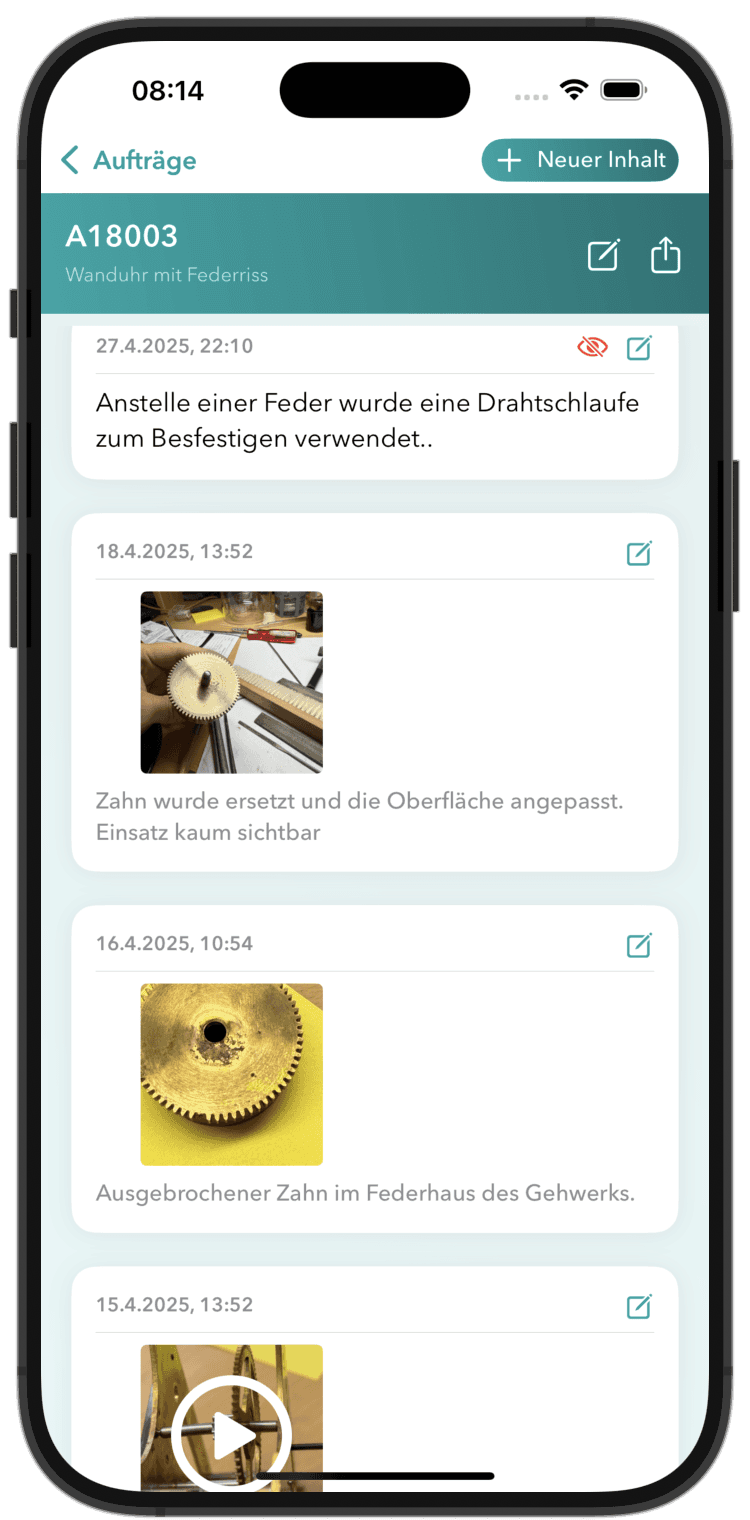
Document Repair Processes Digitally with repairfair – Transparent, Efficient, Traceable
Clean digital repair documentation saves time, minimizes errors, and builds trust. Instead of handwritten notes or confusing Excel lists, digital workflows ensure that every step in the repair process remains traceable—for technicians, customers, and administration. This creates clear responsibilities, fewer follow-up questions, and a transparent foundation for quality and communication.
With the option to define individual repair phases and communicate them digitally (e.g., “open,” “in progress,” “completed”), tasks can be tracked in a structured way and processed efficiently.
repairfair supports you in mapping your repair processes digitally and transparently—intuitively, clearly, and precisely tailored to your workflows. Good craftsmanship starts with the right specialist knowledge. Want to dive deeper? In our Glossary we explain terms and processes from the skilled trades—clearly and practically.
Also explore our other Knowledge Articles and contact us anytime—we look forward to hearing from you!
Expert tip: Local SEO for trade businesses
Local SEO (Search Engine Optimization) is the key to ranking at the top of Google in your own region. Anyone who wants to be found as a carpenter in a city, for example, must clearly signal to Google where they operate and which services they offer.
Optimize your Google Business Profile (formerly Google My Business)
The Google Business Profile is often the first point of contact for potential customers. All information here should be up to date, complete, and presented attractively – including opening hours, photos, services, and contact details. Posts in the business profile and regular updates also increase visibility.
Collect and respond to Google reviews regularly
Good reviews work like digital recommendations. The more positive and authentic customer feedback there is, the higher the likelihood that prospects will get in touch. Equally important: every review – whether positive or critical – should be answered in a friendly and professional manner. This demonstrates customer focus and commitment.
The diversity in the skilled trades is enormous. From traditional construction to highly specialized niche services, craft businesses cover a large share of everyday and commercial tasks.


FAQ – Antworten auf häufig gestellte Fragen
In unserer FAQ-Sektion finden Sie kompakte Antworten auf die häufigsten Fragen rund um digitale Entwicklungen im Handwerk.
Which digital trends are currently shaping the trades?
Mobile time tracking, digital order processing, cloud software, and smart inventory management are among the most important trends. They make processes faster, more transparent, and more efficient. AI-supported planning is also becoming increasingly important.
Why is digital time tracking useful in the skilled trades?
Mobile time tracking, digital order processing, cloud software, and smart inventory management are among the most important trends. They make processes faster, more transparent, and more efficient. AI-supported planning is also becoming increasingly important.
Why is digitalization so important in the skilled trades?
Digital processes save time, reduce costs, and create competitive advantages. In times of skilled labor shortages and pricing pressure, efficient workflows are crucial. Those who work digitally remain future-ready.
What are the advantages of digital time tracking for trades businesses?
It ensures less paperwork, greater clarity, and clear documentation of working hours. This reduces administrative effort and enables precise project costing. It also improves traceability for customers and authorities.
How can craft businesses benefit from cloud solutions?
Cloud software enables location-independent work, automatic updates, and easy team collaboration. Data is stored centrally and can be accessed at any time. This ensures greater flexibility in everyday life.
What role does artificial intelligence play in skilled trades?
AI helps with the planning, maintenance, and analysis of projects. It recognizes patterns, optimizes processes, and reduces errors. AI offers great potential, especially in technical trades.
What challenges are there in digitalization in the skilled trades?
There is often not enough time, expertise, or budget for the transition. In addition, employees need to be brought along and processes adapted. But with simple tools and good training, getting started is achievable.
Which digital tools are particularly helpful for craft businesses?
Digital time tracking, digital repair documentation, project management apps, CRM systems, and invoicing software make everyday work easier. They reduce bureaucracy and provide clarity. It is important that the tools fit the size of the business and day-to-day work routines.
FAQ – Antworten auf häufig gestellte Fragen
In unserer FAQ-Sektion finden Sie kompakte Antworten auf die häufigsten Fragen rund um digitale Entwicklungen im Handwerk.
Which digital trends are currently shaping the trades?
Mobile time tracking, digital order processing, cloud software, and smart inventory management are among the most important trends. They make processes faster, more transparent, and more efficient. AI-supported planning is also becoming increasingly important.
Why is digitalization so important in the skilled trades?
Digital processes save time, reduce costs, and create competitive advantages. In times of skilled labor shortages and pricing pressure, efficient workflows are crucial. Those who work digitally remain future-ready.
How can craft businesses benefit from cloud solutions?
Cloud software enables location-independent work, automatic updates, and easy team collaboration. Data is stored centrally and can be accessed at any time. This ensures greater flexibility in everyday life.
What role does artificial intelligence play in skilled trades?
AI helps with the planning, maintenance, and analysis of projects. It recognizes patterns, optimizes processes, and reduces errors. AI offers great potential, especially in technical trades.
What challenges are there in digitalization in the skilled trades?
There is often not enough time, expertise, or budget for the transition. In addition, employees need to be brought along and processes adapted. But with simple tools and good training, getting started is achievable.
Which digital tools are particularly helpful for craft businesses?
Digital time tracking, digital repair documentation, project management apps, CRM systems, and invoicing software make everyday work easier. They reduce bureaucracy and provide clarity. It is important that the tools fit the size of the business and day-to-day work routines.